
Tending the House: Connecting Snacks to our Children’s Future
My aunt recently gave me a small, worn book printed in 1915. It is called The Runner’s Bible — a pocket collection of scripture “for people on the go.” She received it from her mother. Now it sits in my hands.
In this season of navigating cancer, I have started a quiet ritual. Each morning, I flip through and let a verse find me. It steadies my mind before the day accelerates. It connects me to her — and to the women before her — who endured what they were handed and tended what was theirs to tend.
Recently, the page opened to Proverbs 11:29:
“He that troubleth his own house shall inherit the wind: And the fool shall be servant to the wise of heart.”
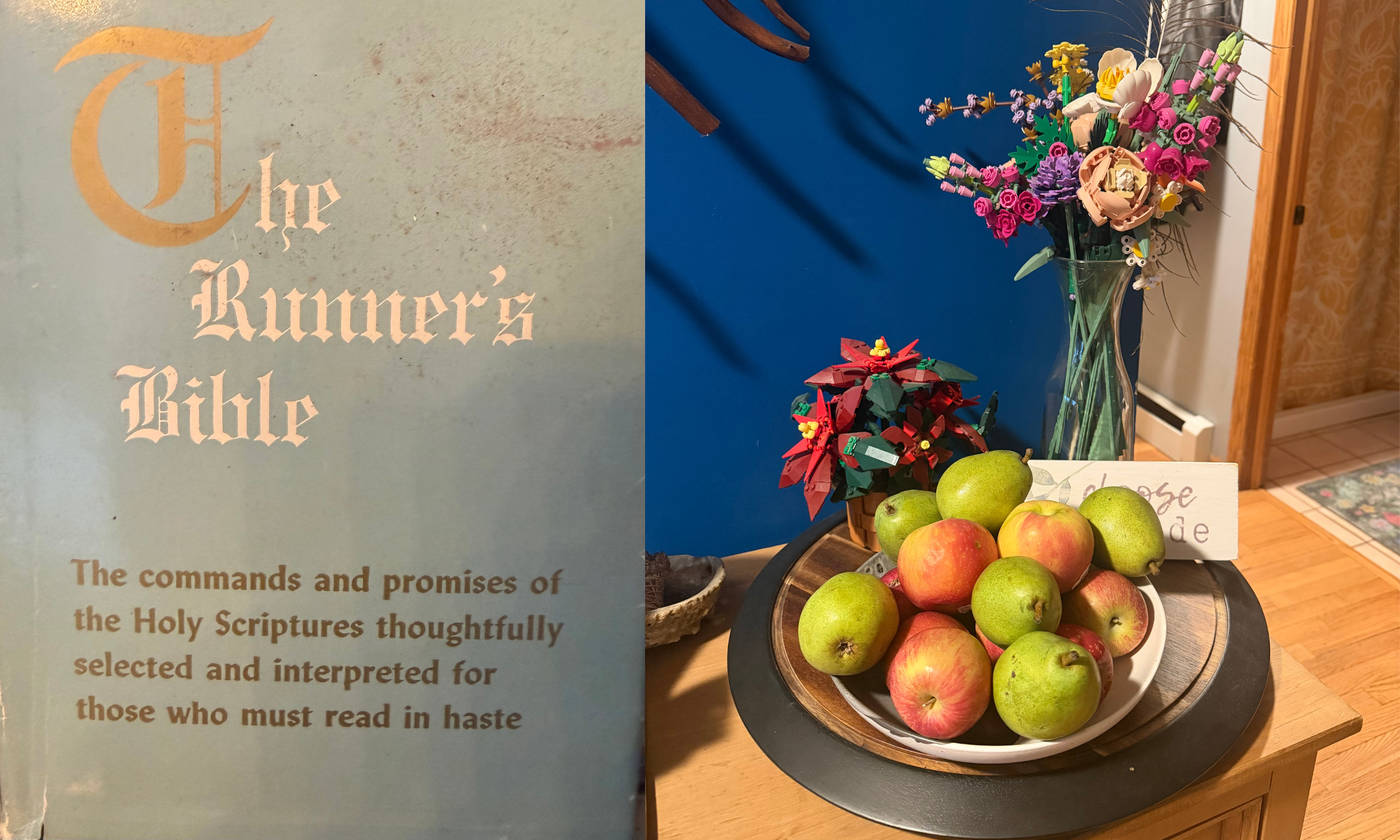
Protecting the House vs Troubling the House
In the ancient world, “house” meant more than walls and a roof. It meant household economy, kinship, survival, stability. To trouble your house was to destabilize the system that sustained you. To inherit the wind was to end up with nothing you could hold.
It struck me that the most intimate house we inhabit is the body. When we destabilize that house — through chronic stress, erratic eating, repeated glucose spikes, nutrient depletion, poor sleep, and constant stimulation — the effects accumulate quietly. Fatigue increases. Mood swings widen. Focus weakens. Healing slows.
We inherit wind slowly.
Today, roughly 60% of adult calories and close to 70% of children’s calories in the United States come from ultra-processed foods (UPFs) high in calories, salt, and sugar and low in fiber and nutrients. These are industrial products engineered for taste, convenience, and shelf life — not metabolic stability.
The diseases strongly linked to long-term dietary patterns — heart disease, type 2 diabetes, and many cancers — are among the leading causes of death in this country.
We are not dying of mystery illnesses. We are living in a food environment that steadily shifts biological terrain toward chronic disease. Food choices are not the only factor in mortality, but they are deeply entangled with the diseases that now dominate death certificates.
Parenting includes protecting a child’s long-term health. And once we know the risk, ignoring it is not neutral.
Healthy Food as a Protective Factor
When we understand that long-term dietary patterns influence lifetime disease risk, feeding children is about protection.
Modern food science understands the brain. When sugar increases slightly, liking increases. When refined flour and fat are combined, preference intensifies. Dopamine fires and we feel soothed, rewarded, stimulated. The experience is immediate and convincing — especially at the end of a long day.
This is engineered.
Bliss points are calculated. Texture is refined. Packaging signals “natural” and “made with real fruit.” Parents reach for what appears responsible, affordable, and kid-approved.
Preference and nourishment operate on different timelines.
The quick burst of energy is followed by a crash — irritability, fog, renewed craving. Repeated spikes strain insulin response. Repeated crashes amplify hunger. Over time, inflammation rises, insulin resistance develops, and the body’s internal balance shifts.
Families navigate a food environment built around convenience, shelf life, and repeat sales. The most visible and affordable options are often the most biologically destabilizing, especially in communities under economic pressure.
Impoverishment does not always look like an empty plate. It often looks like a full pantry stocked in good faith.
Parents are not careless. They are making choices inside a system designed to shape those choices.
Children are not weak. Their brains and bodies respond exactly as human biology responds to engineered reward.
Over time, the pattern takes a toll. Energy destabilizes. Mood regulation weakens. Concentration wavers. The body’s terrain grows more inflamed and less resilient. What looks like behavior can be biology. What feels like defiance can be blood sugar volatility. What shows up as exhaustion can be chronic metabolic strain.
Strengthening families requires strengthening terrain.
Without awareness, metabolic strain accumulates quietly.
The house is troubled by design.
Snacks as Hunger Savers
Ultra-processed foods enter a child’s day in many forms. They appear in school lunches, restaurant meals, and packaged breakfast foods. Snacks are one place where families still hold meaningful control.
They travel in backpacks and car consoles. They fill the gap between meals. Because they are chosen repeatedly, they offer repeated opportunities to protect the house.
Snacks are often framed as treats, rewards, or entertainment. A snack is a bridge. It carries a child to the next meal. It keeps energy steady in class and on the ride home.
What makes a strong bridge?
Structure. Stability. Satiety.
In food terms, that means protein and fiber. These nutrients slow digestion so glucose enters the bloodstream gradually. When the rise is slower, energy and mood stay steady.
Drinks matter, too. Milk — when tolerated — provides protein and fat along with carbohydrates. Unsweetened coconut water hydrates and works best alongside food. A refillable water bottle prevents empty calories from filling the gap.
Snacks built primarily on refined starch and added sugar form fragile bridges.
Easy Swaps That Move the Needle
Shifting toward snacks that keep energy stable happens through mindful shopping and reading labels. Honor cravings while moving away from dyes, trans-fats, and chemical additives. Reduce refined sugar. Rediscover the sweetness of raisins, dates, clementines, and blueberries.
If your child loves salty crunchy snacks:
Brightly colored cheese curls → versions without artificial dyes or lighter puffed options made with simpler ingredients
Tortilla chips → steer away from the bright colors and heavy coatings that stain your fingers and go toward simple salt. Serve with guacamole or a bean dip. Or try snacks made from chickpea flour (such as roasted chana or Indian-style gram flour snacks), which offer more protein and fiber
Brown rice cakes → top with peanut butter or hummus
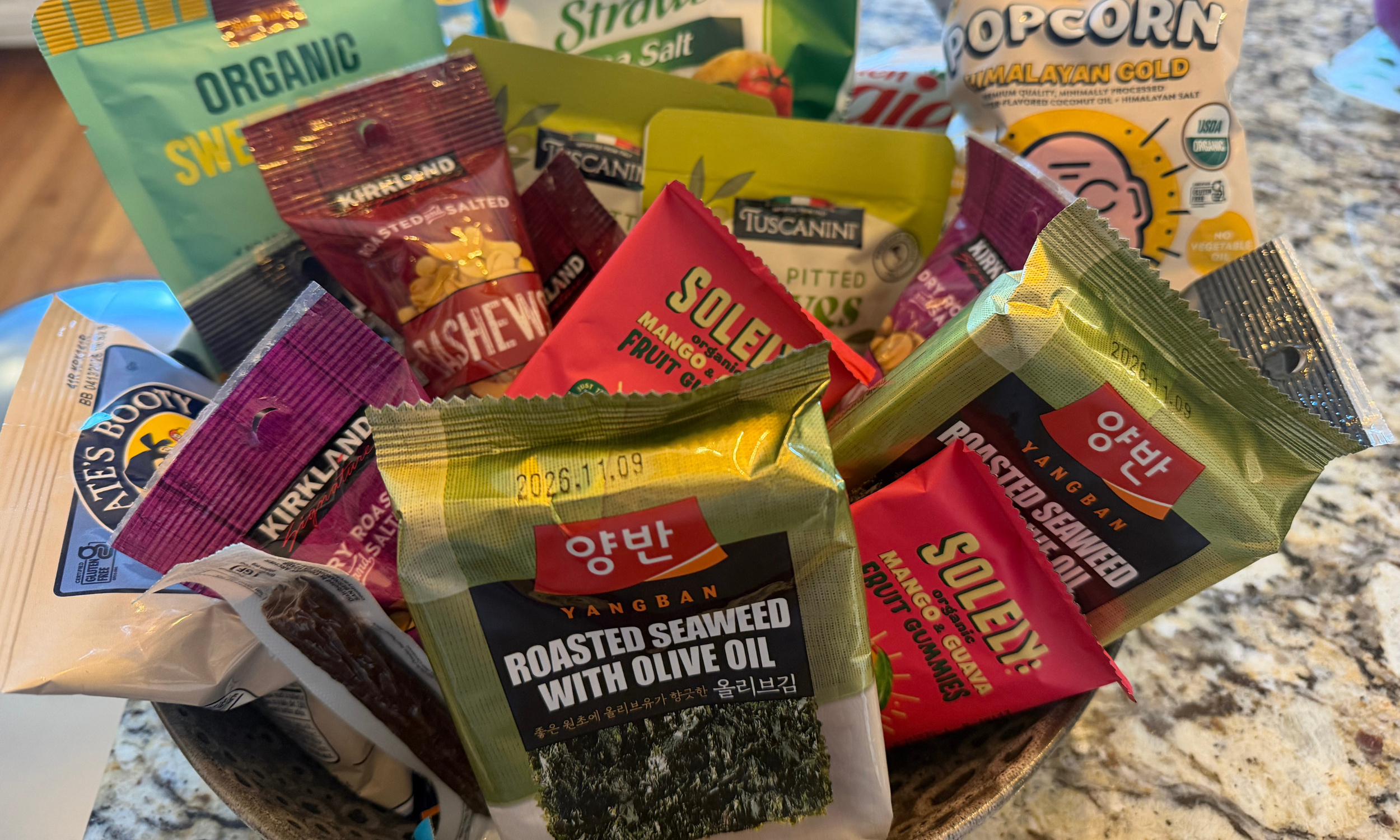
Seaweed snacks → fine for light crunch, and more filling when combined with nuts or cheese
Processed meats → Celery sticks, carrot sticks, apple slices especially with a nut butter or a heathy dip are also yummy
Nuts are a great snack with healthy fats all by themselves
Many traditional snacks from different cultures already have built-in structure — roasted chickpeas, spiced lentil mixes, toasted nuts and seeds, plantain chips with beans, rice and seaweed combinations. These foods often balance starch with protein, fiber, or fat in ways that steady the body more naturally than highly refined snack products.
If sweet is the habit:
Highly sweetened granola bars → bars that have simple ingredients like nuts and dried fruit
Sugary cereal boxes → overnight oats, chia pudding, homemade bars or cookies without added sugar and with protein powder
Fruit roll-ups → real fruit with cheese or peanut butter or unsweetened applesauce. Or trail mixes — made by you
Sweetened yogurt tubes → cheese stick with whole fruit or healthy smoothie
If drinks are the pattern:
Fruit punch or sports drinks → milk (or lactose-free/unsweetened fortified soy milk), or unsweetened coconut water alongside food
Regular Soda → Sparkling water or one of the newer low sugar sodas
Multiple juice boxes a day → one serving paired with food rather than alone
The best swap of all is a water bottle! Teach kids to avoid drinking empty calories
Within almost every familiar category, there is a slightly sturdier option — or a sturdier pairing. And sturdier, repeated daily, changes the long-term signal the body receives.
Small shifts accumulate.
And small shifts protect the house.
The system tells families they are choosing. The environment is engineered.
The least expensive foods are often the most biologically destabilizing. Whole foods can require more time, more planning, and sometimes more money. Over years, those differences compound.
Children who eat in ways that keep blood sugar steady think more clearly. They regulate emotions more easily. They focus longer. They recover faster.
Children who spike and crash struggle more with attention, mood, and energy.
Those differences show up in classrooms.
They show up in discipline records.
They show up in grades.
And over time, they show up in opportunity.
A food system that destabilizes biology widens advantage for families who protect stability.
Energy becomes advantage.
Clarity becomes advantage.
Metabolic stability becomes advantage.
Childhood obesity is now common. Type 2 diabetes, fatty liver disease, and early cardiovascular risk — once rare in children — are appearing earlier in life.
This is structural.
And it is actionable.
Which brings us back to the proverb.
“…and the fool shall be servant to the wise of heart.”
If you do not tend your house wisely, you will serve those who do. Stability builds strength. Instability creates dependence.
Feed Them Like the Wise of Heart
If you want your children to have more options than you did, feed them well. Food is a basic need. It shapes energy, mood, learning, and long-term health. It deserves to be a top priority in the family budget — not the place we cut corners.
Wisdom costs attention more than it costs money.
Protein and fiber are not luxury items. Beans, eggs, oats, peanut butter, lentils, rice, frozen vegetables — these are accessible foods. Pairing foods wisely costs little. Reading a label costs nothing.
Teach them what a bridge snack is. Teach them to read labels. Teach them to notice how their body responds. Teach them to ask:
“How will I feel later?”
“What would be a power snack?”
Children who understand their bodies grow into adults who can regulate themselves.
The proverb does not say the wealthy rule. It says the wise of heart do.
Wisdom lives easily in places where whole foods are visible and central — fruit stands, many ethnic markets, stores that foreground produce and staples. It requires more discernment in aisles dominated by packaging, marketing, and processed convenience — whether in supermarkets or big box stores. It can be hardest in food pantries, where choice is limited and options depend on donation.
And still, it lives wherever families choose intention over impulse.
Tending the house is strategy.
It is strategy for not being a pawn in a rigged game.
It is how you refuse to inherit the wind.
Article by: Kathryn Leigh Goetz