
Our Blog
Join us in conversation about the topics we’re thinking about. How do you see it? What’s on your mind lately?
Meet us here to talk about all things central to creating transformative conversations, things that nurture the spirit of family, promote well-being and prevent violence.

























Words from our CEO
Get more sent to your inbox:
The Conversations We Need: An every-other-week LinkedIn newsletter offering practical guidance on having a variety of different meaningful conversations that strengthen families and communities.
Parenting in the Age of AI: A bi-weekly LinkedIn newsletter guide to helping families thrive in a tech-driven world, from digital literacy to navigating the benefits and challenges of AI with family members of all ages.
Search Our Blog
Sort by Category
The Latest

From Parent Council to Nonprofit: How Kane County Parents Kept Their Parent Cafés
When funding for Cafés ended, Kane County's Spanish-speaking Parent Café community didn't wait for someone to save them — they became a nonprofit. La Voz de Esperanza is a story of the love of community and what peer-led, community-rooted family support looks like.

Closing Reflection: Ten Years, Ten Lessons
When we began this work more than a decade ago, I thought I was helping to build youth leadership.
I now understand that youth were helping to build mine.

Leading with Love
Over the past ten lessons, I’ve shared practical insights from more than a decade of youth-adult partnership work. It feels fitting to end with what has always been at the center of it all:
Love.
The roots of Be Strong Families’ work in the Strengthening Families™ Protective Factors Framework began with a public education campaign called “Love Is Not Enough to Keep Your Family Strong.” The message was both simple and profound: love matters deeply, but by itself it is not enough. Families also need the protective factors that help love to become visible in everyday life.

What Happens When a Community Makes the Parent Café Model Its Own?
Parent Cafés in El Paso didn't grow simply because one organization began hosting more of them. They grew because more people in the community learned how to host them.
El Paso Center for Children began offering Parent Cafés in 2019 through a community-strengthening research project. The organization later made a deeper investment in the model by becoming a Be Strong Families Certified Training Partner (CTP).

Leadership That Grows Together
Be Strong Families talks often about the importance of parent voice. But parent voice only matters if organizations build real structures for listening — and if what parents say can influence what happens next.
That is why parent leadership is built into Be Strong Families at multiple levels, including its governance.

From Conversation to Change: What Oklahoma’s Parent Café Data Shows
The Oklahoma Commission on Children and Youth (OCCY) is seeing what happens when Parent Café conversations are put into practice across communities. Data from 217 Parent Café participants across Oklahoma offers a clear picture. Collected between April 2025 and June 2026, the responses represent Cafés held across all five regions of the state.

Recovering Together Cafés: Creating Space for Families to Heal Together
Recovery is often treated as an individual journey. Be Strong Families’ Recovering Together Cafés were developed around a different idea: families need opportunities to navigate recovery together.

Partnering with Systems as Adult Partners
One of the biggest lessons we learned over a decade of youth leadership work is that partnering with young people also meant partnering with the systems responsible for serving them. In this post, our CEO Kathryn Leigh Goetz reflects on what it takes to build trust on every side, and why real advocacy means listening deeply, verifying facts, and choosing partnership over opposition.

Preparing Youth to Use Their Voice
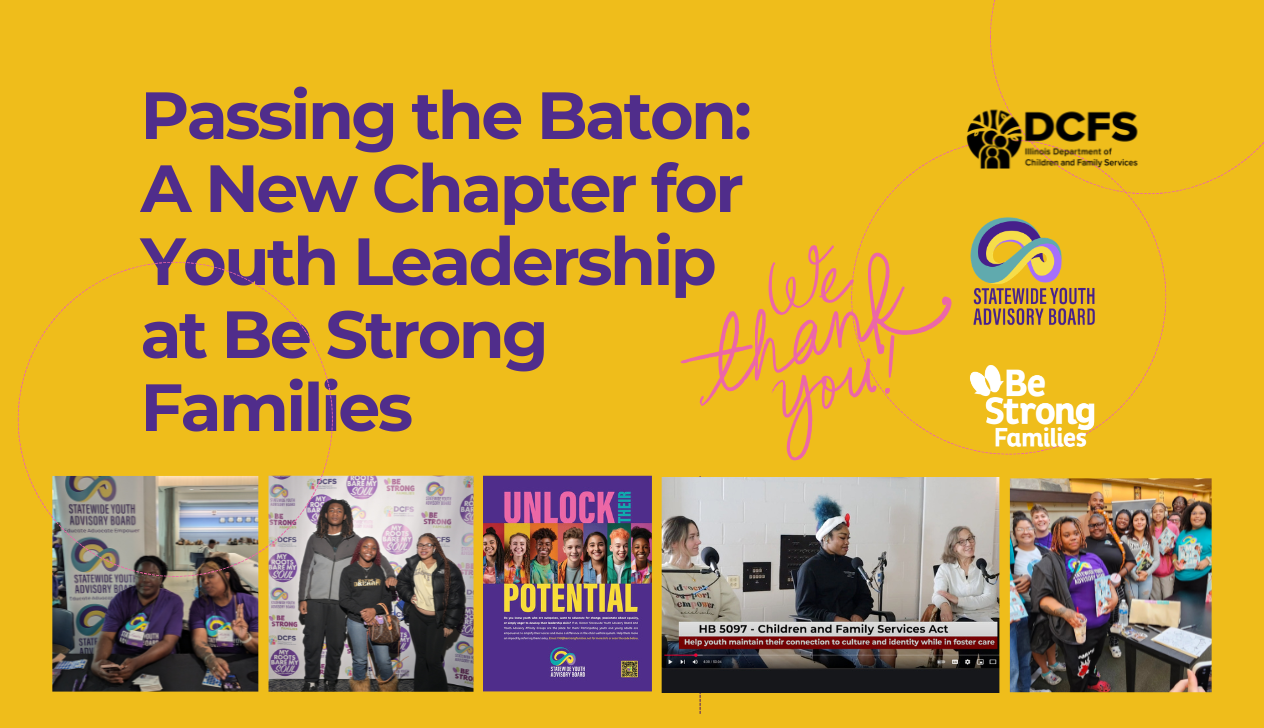
Confidence to speak in front of legislators, judges, or a packed conference room starts months before writing a script. It begins in the everyday experience of being heard. BSF CEO Kathryn Leigh Goetz shares what it really takes to prepare youth to use their voice, from public speaking workshops to standing beside them on the day it matters, including the story of how Youth Advisory Board members helped pass Illinois' Hair Care legislation.
When we began this work more than a decade ago, I thought I was helping to build youth leadership.
I now understand that youth were helping to build mine.