
When Illness Touches the Family: A Gentle Wake-Up Call About Food
The Moment Everything Became Personal
I had found a lump.
That discovery led to the mammogram and ultrasound where I asked the technician a question that most people are afraid to ask. “Can you tell whether it’s cancer?” She paused before answering. “Usually, yes.”
I asked how she could tell. She explained that certain features—spiculated (spiky) margins—often signal malignancy. Then she said something I will never forget: “I’d say this is a five.” On the BI-RADS scale used in breast imaging, a five means highly suspicious for cancer.
So when the phone call came the next day confirming the diagnosis of invasive ductal carcinoma—breast cancer—I was not surprised.
I share this detail because paying attention to our bodies matters. When something feels different, it is worth following through.
As CEO of Be Strong Families, I have spent decades walking alongside families navigating adversity—poverty, violence, trauma, systems involvement, and loss. I have spoken about resilience, protective factors, and the power of everyday moments. Yet when illness enters your own body, those principles move from theory to lived experience. They become personal in an entirely new way.
Very quickly, I began asking different questions—not only about treatment protocols and medications, but about how I am living each day. How am I nourishing my body? What strengthens me? What is within my control?
The Kitchen as a Place of Agency
When serious illness touches a family, one of the first places people often look is the kitchen. I have seen this repeatedly in conversations with parents and caregivers, and I experienced it myself. Questions surface quickly: What are we eating? Is our food helping us stay strong? Are there changes we should make?
For many families, this is when surprising realities emerge. More than 95 percent of Americans do not meet the recommended daily intake of vegetables. More than 95 percent do not meet recommended fiber intake. Approximately 65 percent of the American diet is composed of ultra-processed foods. Only a small fraction of the population consumes the 30 or more unique plant foods per week increasingly associated with gut diversity, immune resilience, and metabolic health.
These statistics are sobering, but they are not a moral indictment of families. This gap is not due to ignorance; it is due to capacity.
Modern life stretches families thin. Parents are working long hours. Caregivers are managing school schedules, financial pressures, medical appointments, and emotional strain. Ultra-processed foods are affordable, convenient, and heavily marketed. Whole foods require planning, time, and energy that many households simply do not have at the end of a long day.
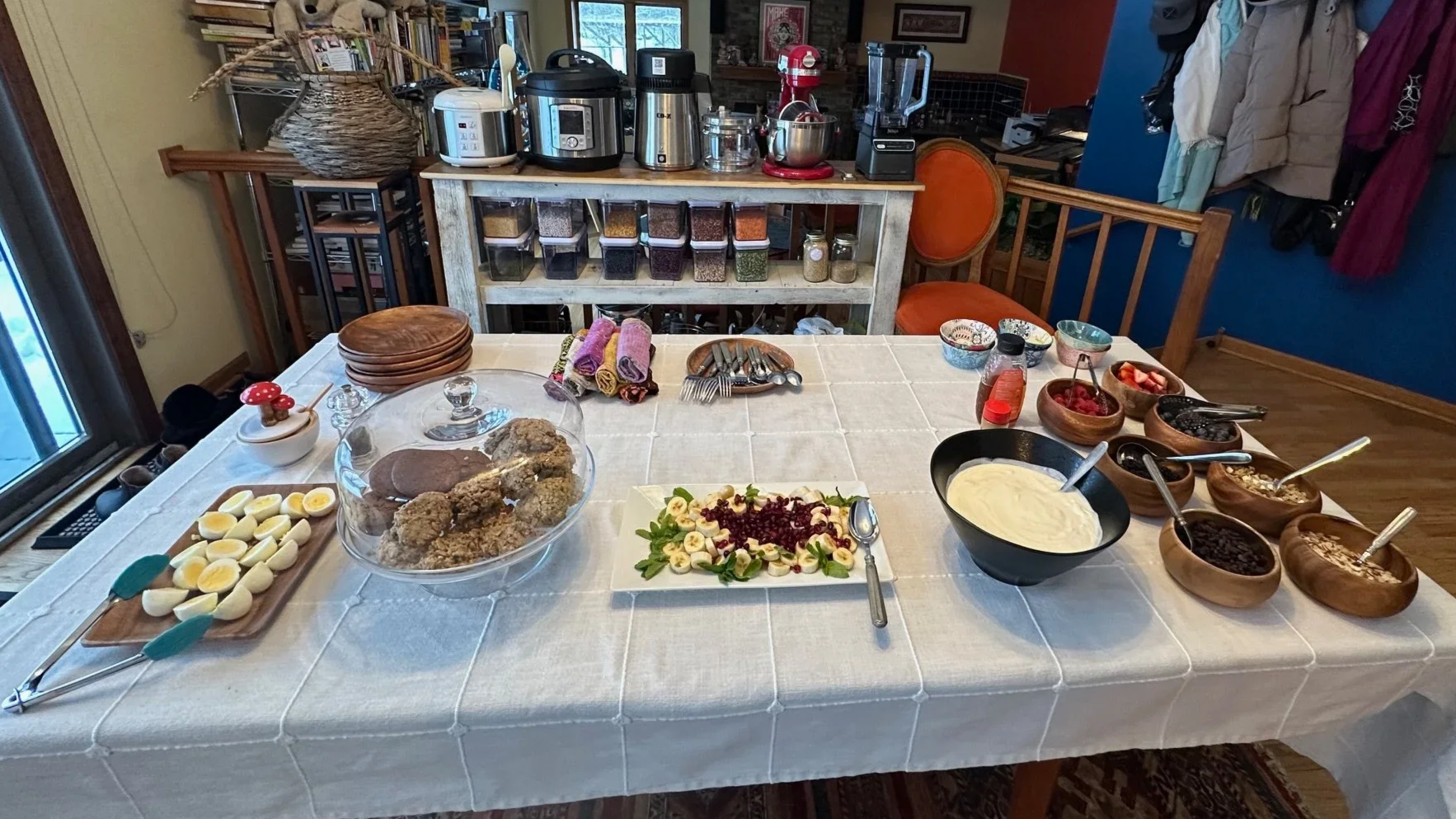
Strengthening the Internal Terrain
I am deeply grateful to be under the care of Keith Block, MD, a pioneer in integrative cancer treatment. Dr. Block combines the best of conventional oncology—including chemotherapy and radiation when necessary—with a comprehensive approach to strengthening the whole person. His philosophy does not treat cancer in isolation; it addresses the body’s internal environment.
Alongside medical treatment, I have received prescriptions not only for medication, but for diet, exercise, stress reduction, sleep efficiency, targeted supplements, and vitamin infusions. The approach is not either/or. It is both/and. Treat the tumor directly, and simultaneously support the terrain in which the tumor exists.
Our bodies are ecosystems. Chronic inflammation, metabolic instability, poor sleep, unmanaged stress, limited plant diversity, and low fiber intake affect immune resilience over time. While no single food prevents or causes cancer, patterns matter. The internal environment can become more supportive of healing—or more vulnerable to disease—depending on how we live.
When families begin adding more vegetables, increasing fiber, reducing ultra-processed foods, moving their bodies, sleeping more consistently, and managing stress more intentionally, they are not chasing perfection. They are strengthening
terrain. They are supporting a body that is more metabolically steady, more immunologically responsive, and less hospitable to chronic disease.
For those navigating cancer treatment or concerned about recurrence, these shifts can feel urgent. But this conversation is not only about cancer. The same habits that help create an internal environment less supportive of cancer growth also support heart health, metabolic stability, cognitive clarity, and emotional regulation. They benefit children, adults, and elders alike. They strengthen families across generations.
This is not about fear. It is about alignment.
Small Changes, Real Impact
Healthy families are not perfect families. They are not all-organic, all-home-cooked, or all-from-scratch households. Healthy families are families who are paying attention and making small, loving changes when they can.
That might look like adding one extra vegetable to dinner a few nights a week. It might mean cooking at home one additional night instead of ordering takeout. It could involve swapping sugary drinks for water or tea, choosing beans or eggs more often, or inviting children to help wash vegetables and stir a pot.
These steps are modest, but over time they matter. They build strength not only in the body, but in the relationships formed around the table.
Nourishment is Relational

One of the insights this season has deepened for me is that nourishment is not only biochemical. It is relational. When families cook and eat together, something stabilizing happens. Children feel safer. Conversations open more naturally. Traditions are reinforced. The kitchen becomes a place of connection, not just consumption.
A cancer diagnosis introduces uncertainty and forces difficult conversations. But it can also become a turning point—a moment when families begin to reclaim small areas of agency in the midst of what feels uncontrollable. We may not control every medical outcome. We cannot eliminate all risk. But we can choose what we prepare for dinner tonight. We can choose to sit down together. We can choose one small shift toward nourishment.
The goal is not perfection. The goal is progress, together.
At Be Strong Families, we believe strength is built in everyday moments. Some of the most powerful of those moments happen around a kitchen table. When illness touches the family, the table can become not only a place of sustenance, but a place of resilience.
In the weeks ahead, I will share simple, affordable, and realistic ways families can build healthier habits—one meal, one conversation, and one small step at a time. Because even in the face of uncertainty, there are places where we can begin.
Sometimes, that beginning is in the kitchen.
Article by: Kathryn Leigh Goetz