
Our Blog
Join us in conversation about the topics we’re thinking about. How do you see it? What’s on your mind lately?
Meet us here to talk about all things central to creating transformative conversations, things that nurture the spirit of family, promote well-being and prevent violence.


One of the biggest lessons we learned over a decade of youth leadership work is that partnering with young people also meant partnering with the systems responsible for serving them. In this post, our CEO Kathryn Leigh Goetz reflects on what it takes to build trust on every side, and why real advocacy means listening deeply, verifying facts, and choosing partnership over opposition.

Confidence to speak in front of legislators, judges, or a packed conference room starts months before writing a script. It begins in the everyday experience of being heard. BSF CEO Kathryn Leigh Goetz shares what it really takes to prepare youth to use their voice, from public speaking workshops to standing beside them on the day it matters, including the story of how Youth Advisory Board members helped pass Illinois' Hair Care legislation.

Accountability and compassion aren't opposites, but two things that depend on each other. Our CEO Kathryn Leigh Goetz reflects on a decade of leading trauma-informed youth programs, and why holding high expectations, paired with belonging and consistency, is one of the clearest ways we can show young people we believe in them.

When youth were disengaging and conflicts were escalating at a statewide leadership weekend, the instinct was to blame the group. Instead, Be Strong Families CEO Kathryn Leigh Goetz asked a different question: what is this environment asking of them? Read about their lesson in intentional design.

Asking young people what they think is only the beginning. BSF CEO Kathryn Leigh Goetz shares what a decade of coordinating Illinois' Youth Advisory Boards taught her and Be Strong Families about designing the conditions for meaningful participation alongside youth.

Youth learn leadership long before they're taught it by watching the adults around them. BSF CEO Kathryn Leigh Goetz reflects on what it really means to be a role model in youth engagement work: how we handle conflict, how we leave, and whether we ever use young people to carry our own agendas.

For youth who have experienced loss and disruption, every adult who leaves can feel like abandonment. BSF CEO Kathryn Leigh Goetz explains why healthy professional boundaries in youth work protect young people, and what authentic youth-adult partnership actually requires of adults.

We kept hiring chaperones and kept getting disappointing results. Then we realized we were recruiting for exactly the job we were getting. BSF CEO Kathryn Leigh Goetz on the small title change that transformed who showed up and what we learned about the real work of youth-adult partnership.

We spent years creating spaces where youth in care felt welcomed and heard. Then a single question from our program monitor reframed everything: were we designing spaces for youth to participate — or spaces that positioned them to lead? Hear from BSF CEO Kathryn Leigh Goetz on the distinction that changed the trajectory of our work.
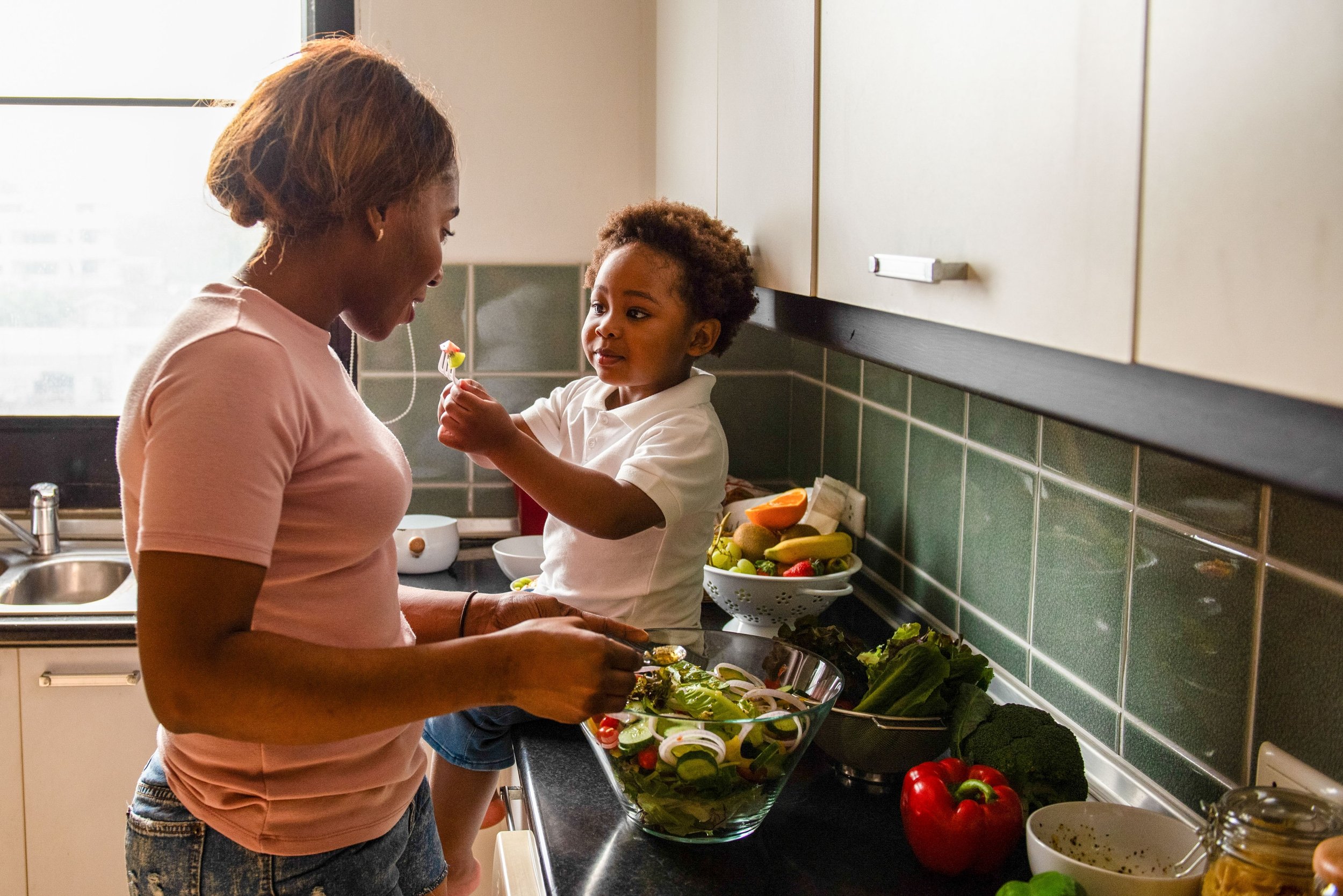
We invest in books because language matters. We invest in play because children learn through exploration. So why do we treat food as an afterthought? BSF CEO Kathryn Leigh Goetz makes the case that every snack served in an early childhood or family support center is curriculum — and that nourishment belongs at the center of our mission.
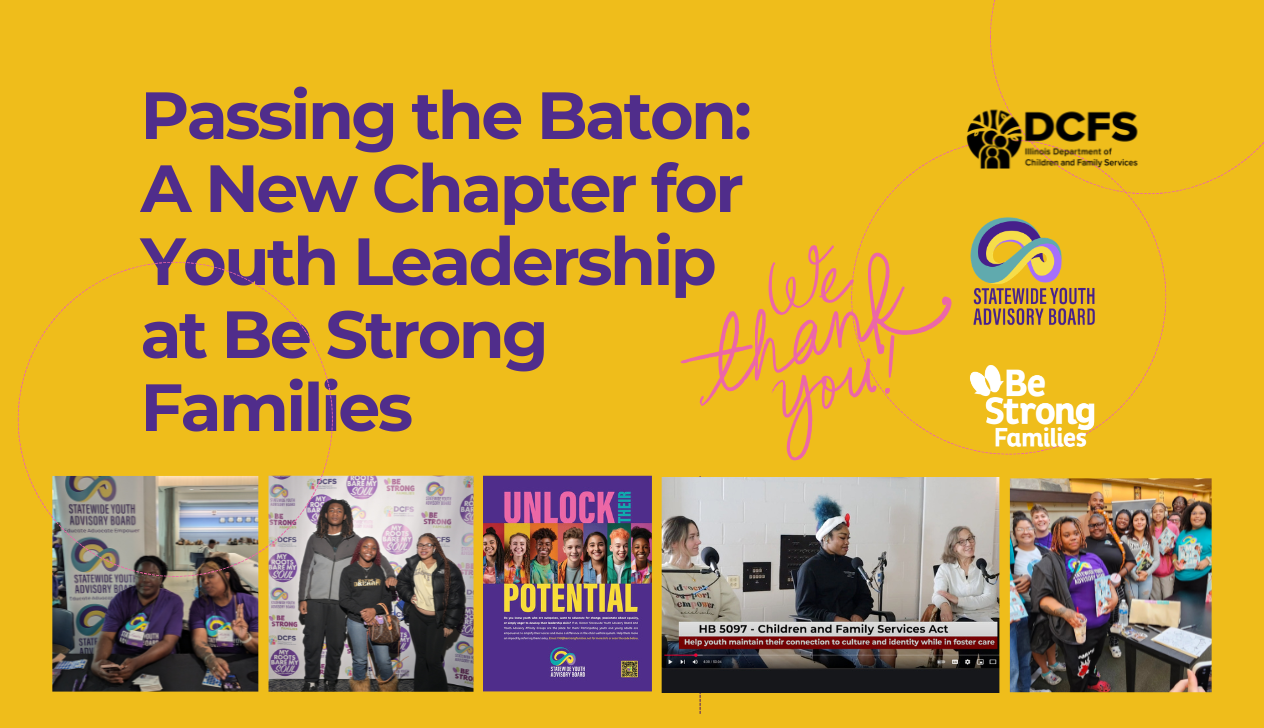
Be Strong Families is closing its chapter as coordinator of Illinois' Youth Advisory Board network — and opening a new one. CEO Kathryn Leigh Goetz reflects on a decade of youth-led advocacy, policy wins, and what comes next for BSF's growing youth leadership work nationwide.

When healthy food costs more, takes longer to prepare, and is harder to find, the burden can't rest on parents alone. We explore what family support organizations and early childhood centers are doing to step up as partners in nutritional equity, from two-generation cooking classes to school meal advocacy.

"Real food is elitist" sounds compassionate, but look closer. BSF CEO Kathryn Leigh Goetz challenges the assumption that low-income families can't prioritize nourishment, and makes the case that true equity means both upgrading systems and honoring every family's agency.

Not long ago, cooking wasn’t a hobby; it was a basic human skill. BSF CEO Kathryn Leigh Goetz traces how we lost that art, what replaced it, and why reclaiming the kitchen may be one of the most important things families can do for their children's health and future.

"I'm going to have to eat vegetables for the rest of my life?!" A ten-year-old's horror at a few microgreens on a sandwich turns out to be a window into how the food industry captured children's palates, and what it will take to win them back.

The most intimate house we inhabit is the body and what we feed our children shapes that house daily. BSF CEO Kathryn Leigh Goetz draws on an inherited pocket Bible, a cancer diagnosis, and modern food science to make the case that snacks are not just treats. They are small, repeated acts of protection.
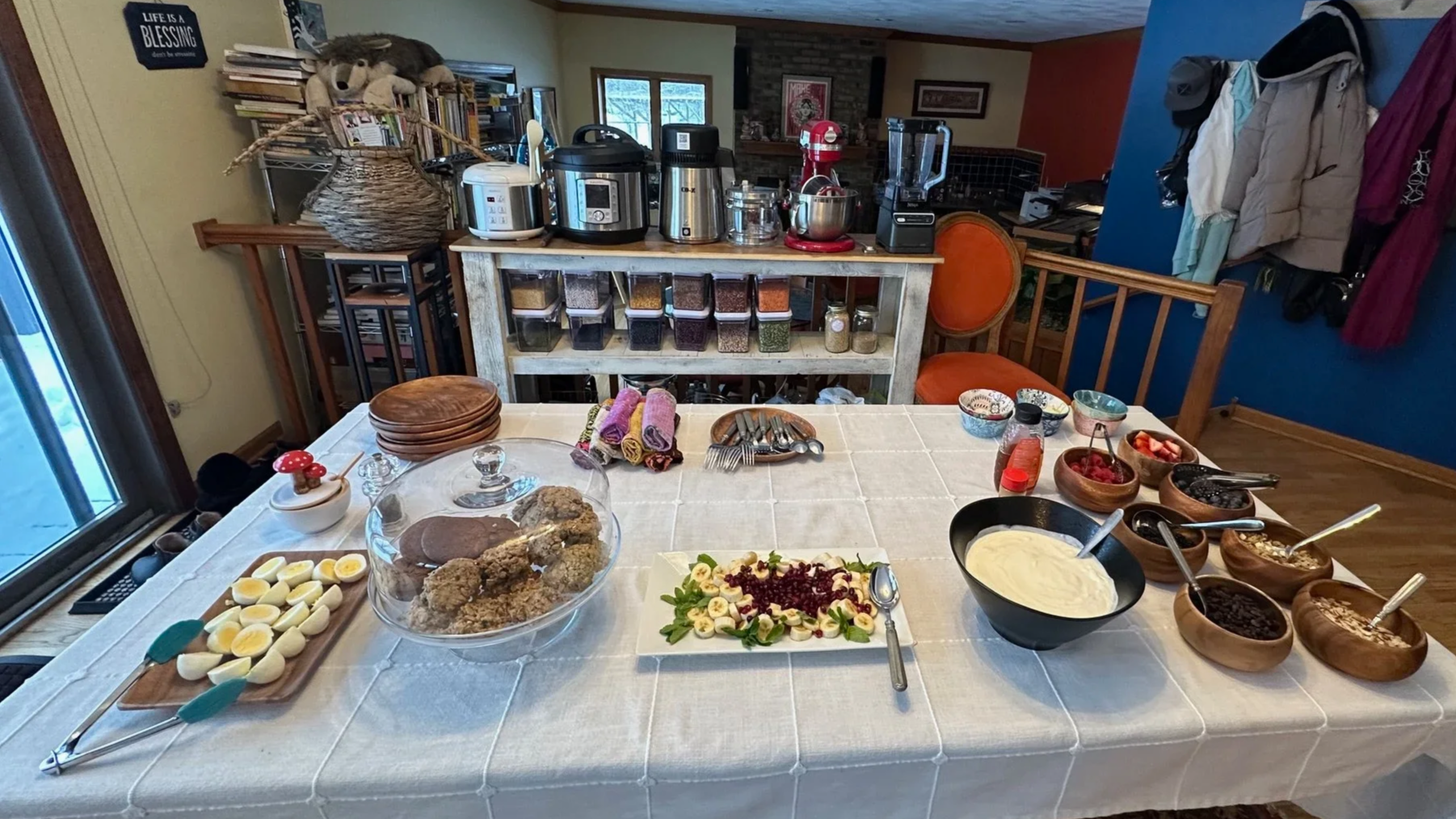
When BSF CEO Kathryn Leigh Goetz received a breast cancer diagnosis, the principles she'd spent decades teaching families became deeply personal. Here, she reflects on what a serious illness reveals about how we nourish ourselves and why small, loving changes around the kitchen table can be among the most powerful acts of resilience a family can take.

As an executive director (ED) of a non-profit, building a strong, collaborative relationship with your board of directors is crucial. Many EDs hesitate to communicate openly with their board due to fear of a perceived power differential, but it's essential to remember that while you report to them, no one else does. You are in charge of your staff and operations. If you’re doing your job well, the board will respect and support your leadership. They are looking to you to lead and to structure their role so that they can make a meaningful contribution without it taking too much of their time and energy (they are volunteers which means they generally have lots of other obligations! and this is important to remember as it works in your favor.)

In this blog series, I’ve spoken about my commitment to racial equity and undoing the damage systemic racism has caused all of us. I’ve called out performative allyship, stressing that authentic engagement must come from gut-level and heart-level understanding, born of personal experiences that reveal the real benefits of DEI work. One question that lingers, even if unvoiced, is: Why? As a white person, even my own mother once asked me, “Why don’t you like white people? Why don’t you seem to trust people like you?”

While gender is increasingly understood as a spectrum and social construct, the binary framework of masculinity and femininity remains deeply embedded in cultural norms. Traditionally masculine qualities—such as assertiveness, competitiveness, and decisiveness—continue to dominate perceptions of effective leadership. However, these qualities alone are insufficient for the complex challenges of modern leadership, making it essential to examine the shadow and light of both masculine and feminine traits.

Where do Jews fit in DEI conversations? This blog explores the complexities of Jewish identity in diversity, equity, and inclusion spaces, challenging assumptions and addressing the erasure of Jewish voices. Through personal reflection and real-life stories, it examines how oversimplifications undermine the core values of DEI and calls for a more inclusive approach that honors all lived experiences. Dive in to uncover how we can evolve the conversation to truly embrace empathy, compassion, and the richness of our collective diversity.

DEI isn't a political agenda. DEI is the work of living up to values we've been pledging allegiance to since kindergarten. BSF CEO Kathryn Leigh Goetz responds to high-profile DEI failures with a call to lead with love, create brave spaces, and remember that liberty and justice for all was always the point.

True collaboration in racial equity work is harder than it looks — and not always for the reasons we expect. BSF CEO reflects honestly on a dozen dynamics that create no-win situations, stall progress, and complicate even the most well-intentioned efforts toward equity and belonging.

Identity acknowledgment without behavior change is a dead end. BSF CEO Kathryn Leigh Goetz reflects honestly on what it means to lead as a white woman in racial equity work, and the difference between leading from privilege and leading as an ally.

Most family support is delivered by professionals, but Parent Cafés were designed to flip that model. We explore how Cafés shift the social service paradigm by putting parents in the lead, building confidence and real-world skills while creating the kind of reciprocal community support that no program can manufacture.

What happens when suit-and-tie bureaucrats sit down with parents from the south side of Chicago? Or when foster parents and birth parents share a table? Magic, according to BSF. We explore how Parent Cafés quietly disrupt bias, shift power dynamics, and create genuine belonging, one conversation at a time.

Loneliness is a public health crisis, and Parent Cafés are part of the solution. We explore the connection between social isolation and family well-being, and why intentionally building social connections isn't just good for parents, it's good for all of us.

Interpersonal trauma is healed through corrective social experiences, which Parent Cafés were designed to create. In this installment of "Why Are Cafés So Great?", BSF CEO Kathryn Leigh Goetz makes the case for Cafés as a powerful, accessible space for healing trauma.

What if Parent Cafés are doing some of the same work as therapy and for some people, working even better? We explore the parallels between Cafés and conventional mental health services, and why peer-based community connection may be one of the most undervalued tools in the mental health toolkit.

BSF doesn't just prevent crises; we help people navigate them. In this edition of "Why Are Cafés So Great?", our CEO reframes the conversation around crisis intervention, asking: what if the real agents of change aren't the professionals, but the community itself?
Words from our CEO
Get more sent to your inbox:
The Conversations We Need: An every-other-week LinkedIn newsletter offering practical guidance on having a variety of different meaningful conversations that strengthen families and communities.
Parenting in the Age of AI: A bi-weekly LinkedIn newsletter guide to helping families thrive in a tech-driven world, from digital literacy to navigating the benefits and challenges of AI with family members of all ages.
Search Our Blog
Sort by Category
The Latest
Making America Great with DEI: Liberty and Justice for All
DEI isn't a political agenda. DEI is the work of living up to values we've been pledging allegiance to since kindergarten. BSF CEO Kathryn Leigh Goetz responds to high-profile DEI failures with a call to lead with love, create brave spaces, and remember that liberty and justice for all was always the point.