
Our Blog
Join us in conversation about the topics we’re thinking about. How do you see it? What’s on your mind lately?
Meet us here to talk about all things central to creating transformative conversations, things that nurture the spirit of family, promote well-being and prevent violence.



























Words from our CEO
Get more sent to your inbox:
The Conversations We Need: An every-other-week LinkedIn newsletter offering practical guidance on having a variety of different meaningful conversations that strengthen families and communities.
Parenting in the Age of AI: A bi-weekly LinkedIn newsletter guide to helping families thrive in a tech-driven world, from digital literacy to navigating the benefits and challenges of AI with family members of all ages.
Search Our Blog
Sort by Category
The Latest

They Are Watching You
Youth learn leadership long before they're taught it by watching the adults around them. BSF CEO Kathryn Leigh Goetz reflects on what it really means to be a role model in youth engagement work: how we handle conflict, how we leave, and whether we ever use young people to carry our own agendas.

Healthy Boundaries Are an Act of Care
For youth who have experienced loss and disruption, every adult who leaves can feel like abandonment. BSF CEO Kathryn Leigh Goetz explains why healthy professional boundaries in youth work protect young people, and what authentic youth-adult partnership actually requires of adults.

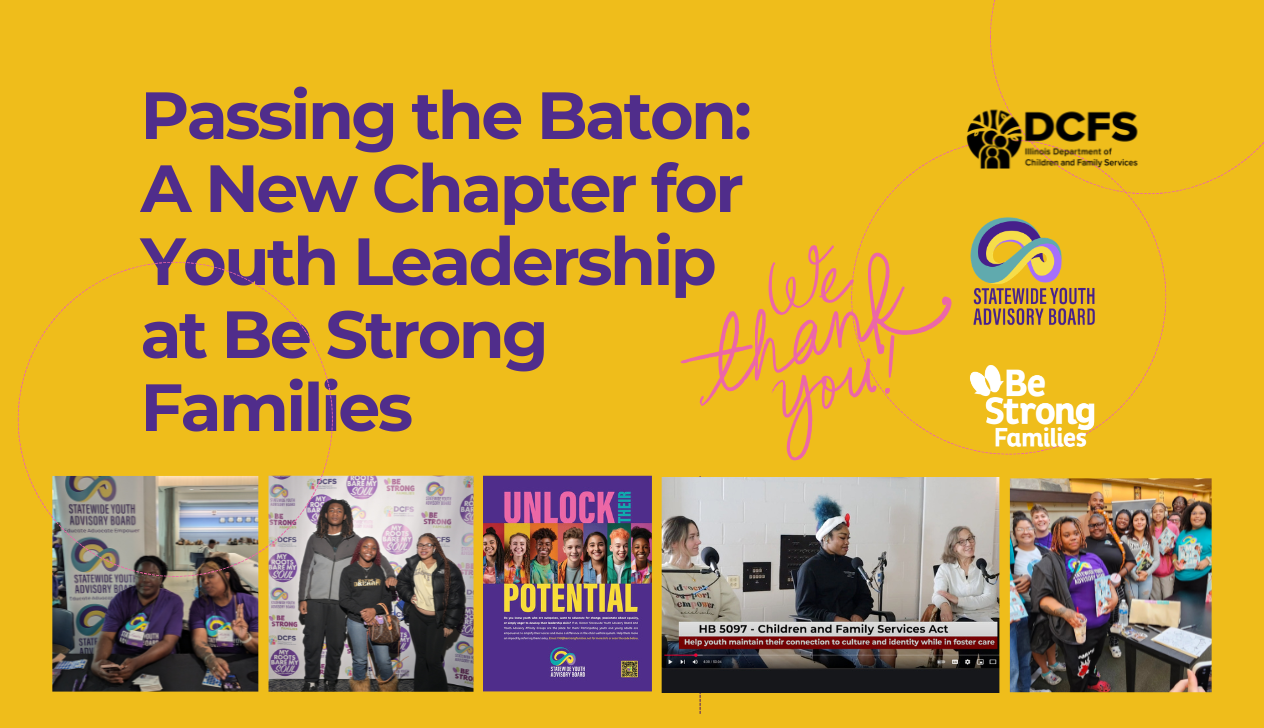
Passing the Baton: A New Chapter for Youth Leadership at Be Strong Families
Be Strong Families is closing its chapter as coordinator of Illinois' Youth Advisory Board network — and opening a new one. CEO Kathryn Leigh Goetz reflects on a decade of youth-led advocacy, policy wins, and what comes next for BSF's growing youth leadership work nationwide.

Leading WITH Your Board of Directors as a Non-Profit Exec
As an executive director (ED) of a non-profit, building a strong, collaborative relationship with your board of directors is crucial. Many EDs hesitate to communicate openly with their board due to fear of a perceived power differential, but it's essential to remember that while you report to them, no one else does. You are in charge of your staff and operations. If you’re doing your job well, the board will respect and support your leadership. They are looking to you to lead and to structure their role so that they can make a meaningful contribution without it taking too much of their time and energy (they are volunteers which means they generally have lots of other obligations! and this is important to remember as it works in your favor.)

The Shadow and Light of Femininity in Leadership
While gender is increasingly understood as a spectrum and social construct, the binary framework of masculinity and femininity remains deeply embedded in cultural norms. Traditionally masculine qualities—such as assertiveness, competitiveness, and decisiveness—continue to dominate perceptions of effective leadership. However, these qualities alone are insufficient for the complex challenges of modern leadership, making it essential to examine the shadow and light of both masculine and feminine traits.

Where Do Jews Fit in DEI Conversations?
Where do Jews fit in DEI conversations? This blog explores the complexities of Jewish identity in diversity, equity, and inclusion spaces, challenging assumptions and addressing the erasure of Jewish voices. Through personal reflection and real-life stories, it examines how oversimplifications undermine the core values of DEI and calls for a more inclusive approach that honors all lived experiences. Dive in to uncover how we can evolve the conversation to truly embrace empathy, compassion, and the richness of our collective diversity.

Is It Because I’m … ?
In tense moments, the question “Is it because I’m White?” (or Black, Latino, or Asian) often comes up when race seems to explain what's happening. While race plays a role, it’s usually not the whole story.

Beyond Words: Embodied Practices for Real DEI and Racial Equity
In recent years, Diversity, Equity, and Inclusion (DEI) has become a focal point in workplaces, schools, and communities across the nation. But for DEI and racial equity to truly succeed, it’s essential to go beyond conversations and implement practices that support healing and embodiment. Why? Because the stress of racism and discord impacts everyone’s health—physically, mentally, and emotionally.

Navigating Whiteness as an Ally and a Leader: Reflections on Identity, Privilege, Behavior, and Intent
Identity acknowledgment without behavior change is a dead end. BSF CEO Kathryn Leigh Goetz reflects honestly on what it means to lead as a white woman in racial equity work, and the difference between leading from privilege and leading as an ally.
When we began this work more than a decade ago, I thought I was helping to build youth leadership.
I now understand that youth were helping to build mine.