
Our Blog
Join us in conversation about the topics we’re thinking about. How do you see it? What’s on your mind lately?
Meet us here to talk about all things central to creating transformative conversations, things that nurture the spirit of family, promote well-being and prevent violence.






















Words from our CEO
Get more sent to your inbox:
The Conversations We Need: An every-other-week LinkedIn newsletter offering practical guidance on having a variety of different meaningful conversations that strengthen families and communities.
Parenting in the Age of AI: A bi-weekly LinkedIn newsletter guide to helping families thrive in a tech-driven world, from digital literacy to navigating the benefits and challenges of AI with family members of all ages.
Search Our Blog
Sort by Category
The Latest

My Journey to Vitality
Nadia Washington was wearing a superwoman cape and a mask, but underneath, felt like she was falling apart. Her honest reflection on grief, the Protective Factors, and her journey to vitality is a testament to the power of safe spaces and authentic connection.

Without Hitting, Yelling, Shaming, Intimidating: What’s a Parent To Do?
The American Academy of Pediatrics issued their strongest statement yet against spanking (which they defined as “noninjurious, openhanded hitting with the intention of modifying child behavior”) and also said to avoid non-physical punishment that is humiliating, scary, or threatening.
So, what’s a parent to do?

One Person’s Truth is Another Person’s Hate: Grappling with Anti-Semitism while Pursuing Liberty and Justice for All
Written before the Pittsburgh synagogue massacre and published in its aftermath, this reflection from BSF grapples honestly with anti-Semitism on both the left and the right — and what it means to fight for justice for all families.

Parent Engagement through the Lens of Equity
Weiss et al. highlight how family engagement is key to achieving equity for kids in schools, and offer examples of how engaging parents as co-creators, co-learners, community-builders and decision-makers creates the condition for equitable learning.

Living the Protective Factors
After losing both parents within 18 months, Robyn Harvey found herself leaning on the Protective Factors for support. Her reflection is a reminder that this framework isn't just for parenting — it's a foundation for navigating life itself.

My Forever Home
No one ever talks about successful foster homes. A BSF staff member shares her own story of being removed from her home in Puerto Rico as a teenager, to finding the foster family she calls her forever home. A powerful reminder of what it means to truly belong.

Parenting Advice Remix: Balancing the Experts with Experience
A clickbait headline about what "successful" parents do differently turned out to reveal something more important: whose families research actually centers, and whose it leaves out. Alexis Moreno reflects on growing up in a lower-income household and what it really looks like to build a strong family without the assumed resources.

What Does Family Mean to You?
Family means something different to everyone. Hear from our Board of Directors — researchers, social workers, educators, and community leaders — on what family truly means to them: personal, expansive, and rooted in the belief that strong families are the foundation of healthy communities.

The Philadelphia Experience with Parent Cafés
On August 15, 2018, the Philadelphia Department of Human Services held their fourth annual Strengthening Families Summit, which debuted this video introducing Parent Cafés from the perspective of parent leaders.
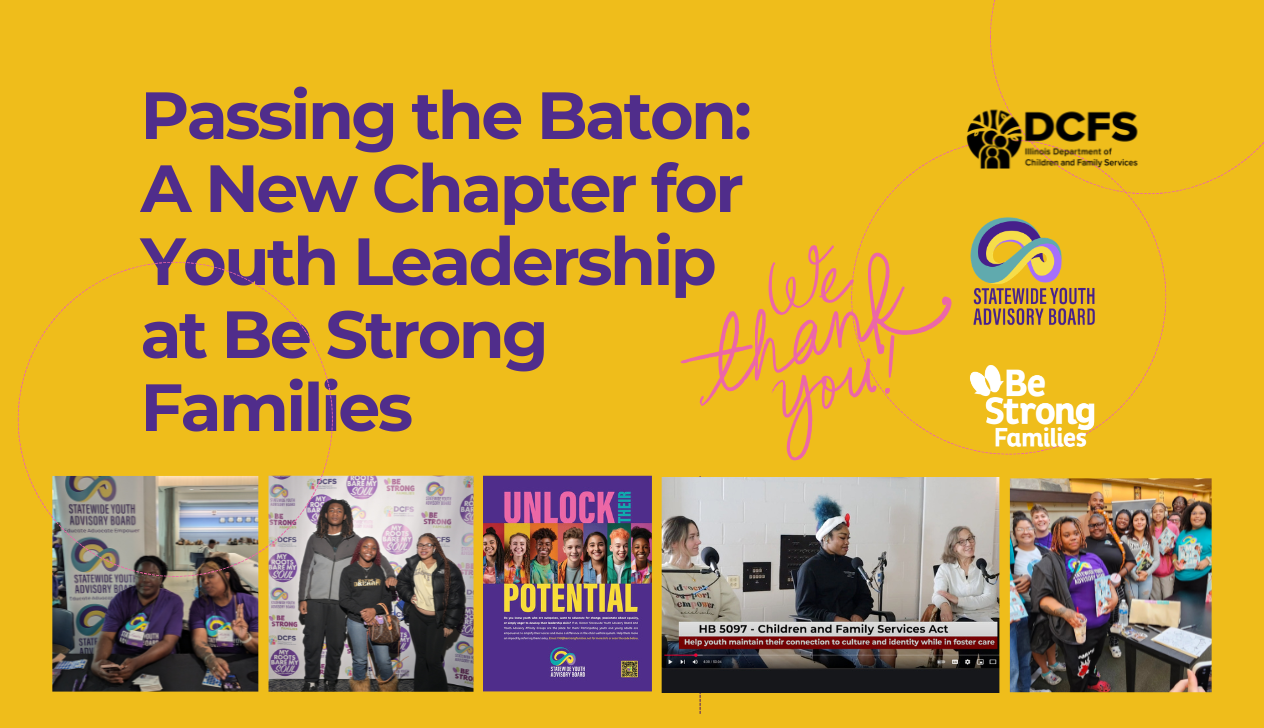
When we began this work more than a decade ago, I thought I was helping to build youth leadership.
I now understand that youth were helping to build mine.